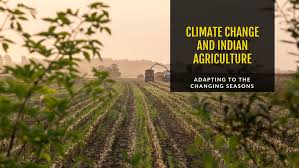










































Agriculture is the backbone of India’s economy, employing nearly half of the population. However, climate change poses serious threats to this vital sector — affecting crop yields, water availability, and farmer livelihoods. Understanding these impacts and adopting effective adaptation strategies is crucial to ensure food security and sustainable development.
Let’s dive into how climate change is influencing Indian agriculture and explore practical ways farmers and policymakers can respond.
🌟 How Climate Change Affects Indian Agriculture
✅ Erratic Rainfall: Unpredictable monsoon patterns lead to droughts and floods, disrupting planting and harvesting.
✅ Rising Temperatures: Higher heat stresses crops, reducing yields of staples like wheat, rice, and pulses.
✅ Soil Degradation: Increased erosion and salinity threaten soil fertility.
✅ Water Scarcity: Melting glaciers and reduced groundwater recharge impact irrigation availability.
✅ Pest and Disease Outbreaks: Warmer conditions favor the spread of crop pests and diseases.
🚧 Challenges for Farmers
🔹 Income Uncertainty: Crop failures and reduced productivity cause financial instability.
🔹 Lack of Awareness: Many farmers lack access to timely climate information and adaptation techniques.
🔹 Limited Resources: Smallholders struggle to invest in climate-resilient technologies.
🔹 Market Risks: Price volatility compounds farmers’ vulnerabilities.
🌱 Adaptation Strategies
✅ Climate-Resilient Crops: Developing and adopting drought, heat, and pest-resistant varieties.
✅ Efficient Water Management: Techniques like drip irrigation, rainwater harvesting, and micro-irrigation conserve water.
✅ Agroforestry and Crop Diversification: Combining trees with crops enhances soil health and income sources.
✅ Weather Forecasting & Advisory Services: Providing farmers with real-time climate data helps plan activities better.
✅ Sustainable Practices: Conservation agriculture, organic farming, and reduced chemical use improve resilience.
🌍 Government and Institutional Support
✅ Policies: Schemes like Pradhan Mantri Krishi Sinchayee Yojana (PMKSY) and National Innovations on Climate Resilient Agriculture (NICRA) promote adaptation.
✅ Research & Development: Agricultural universities and research centers develop new technologies and provide training.
✅ Financial Aid: Crop insurance schemes and credit support reduce risks.
✅ Community Programs: Farmer collectives and NGOs play a key role in knowledge sharing.
🌟 The Way Forward
Addressing climate change’s impact on agriculture requires a multi-stakeholder approach involving farmers, scientists, policymakers, and businesses. Embracing innovation, enhancing education, and strengthening support systems will be vital to safeguarding India’s agricultural future.
🚀 Final Thoughts
Climate change is a pressing challenge but also an opportunity to transform Indian agriculture into a more sustainable and resilient system. By adopting smart strategies and collaborative efforts, India can protect its farmers and ensure food security for generations to come.
💬 Are you connected to agriculture or aware of local climate adaptation efforts? Share your experiences and ideas in the comments!
Would you like me to include case studies of successful climate adaptation projects or tips for sustainable farming? Let me know!Tools
ChatGPT can make mistakes. Check important i