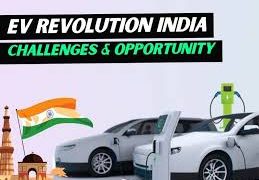










































India is accelerating toward an electric future. With growing concerns about climate change, air pollution, and fuel prices, electric vehicles (EVs) are no longer a luxury—they’re becoming a necessity. But while the EV revolution is gaining speed, it still faces a few bumps along the way.
Let’s explore the landscape of EVs in India—what’s driving the change, what’s slowing it down, and what lies ahead.
🔋 Why EVs Are the Future of Transportation in India
- Environmental Urgency: With 14 of the 20 most polluted cities in the world located in India, switching to EVs is vital to reduce air pollution.
- Fuel Independence: EVs reduce our dependency on imported crude oil, improving energy security.
- Economic Push: The government is pushing for “Make in India” electric vehicles, creating jobs and encouraging innovation.
🚗 The Current EV Scene
India has seen a boom in electric two-wheelers, three-wheelers, and cars. Companies like Tata Motors, Ather Energy, Ola Electric, and Mahindra are leading the charge.
- Electric 2-Wheelers: Rapidly adopted due to affordability and urban usage.
- Electric 3-Wheelers: Dominating last-mile delivery and public transport in smaller cities.
- Electric Cars: Slowly gaining ground, led by Tata Nexon EV and MG ZS EV.
💡 Government Initiatives Fueling the Growth
- FAME II Scheme: Offers subsidies for electric 2-wheelers, 3-wheelers, and buses.
- State-Level Policies: Delhi, Maharashtra, Tamil Nadu, and others offer tax breaks and incentives for EV buyers and manufacturers.
- Battery Swapping Policy: Promoted for faster charging and better energy management.
🚧 Challenges on the Road Ahead
Despite progress, the EV ecosystem still faces key hurdles:
- Lack of Charging Infrastructure: India has less than 10,000 public charging stations—nowhere near enough for the growing EV population.
- High Initial Costs: EVs are still more expensive upfront compared to petrol/diesel vehicles.
- Battery Technology: Lithium-ion batteries are costly, and India is still developing a reliable domestic supply chain.
- Range Anxiety: Consumers worry about running out of charge mid-journey.
🔍 Opportunities for Growth
The EV space in India is full of potential:
- Local Manufacturing: Incentives for making batteries, motors, and EV parts locally will boost the economy and reduce costs.
- Startup Innovation: EV startups are introducing swappable batteries, solar charging, and smart vehicle features.
- Job Creation: A strong EV industry can generate thousands of new jobs in manufacturing, software, energy, and infrastructure.
- Global Investment: Companies like Tesla, Hyundai, and BYD are watching India’s EV market closely for expansion.
🔮 The Road Ahead
India aims to have 30% of all vehicles electric by 2030. To reach this goal:
- Public-private collaboration is essential.
- Consumer awareness must increase.
- Charging networks need rapid expansion.
- Battery recycling and waste management must be planned.
⚙️ Final Thoughts
Electric vehicles represent a cleaner, smarter, and more sustainable future for India. With the right mix of policy support, innovation, and infrastructure, India can become a global leader in EV adoption and manufacturing.